
Chinese Table Tennis Experts in North Macedonia: Four Days of System Transfer and the Measurement Problem
**Câu trả lời cốt lõi**: Một đoàn chuyên gia bóng bàn Trung Quốc, trong đó có Zhang Yining, đã tập huấn cho vận động viên trẻ Bắc Macedonia và Serbia tại Skopje từ ngày 7 đến 10 tháng 9. Chương trình nằm trong chiến lược xuất khẩu hệ thống huấn luyện của Trung Quốc, là hợp tác khu vực, không phải một sự kiện thi đấu có tính điểm. **Dữ kiện chính**: - Chủ nhà là Hiệp hội Bóng bàn Bắc Macedonia; khách đến từ mạng lưới Học viện Bóng bàn Trung Quốc. - Vận động viên trẻ Serbia được mời theo thỏa thuận hợp tác với Hiệp hội Bóng bàn Serbia. - Nội dung gồm chia sẻ chuyên môn, phương pháp huấn luyện, cải thiện kỹ thuật, tập trung vào phát triển trẻ. - Nguồn không nêu năm diễn ra, không có tỷ số, thứ hạng hay chỉ số kỹ thuật nào. - Sự hiện diện của Zhang Yining được mô tả là nguồn cảm hứng và là yếu tố truyền thông chính. **Nguồn**: Liên đoàn Bóng bàn Châu Âu (ETTU), thông cáo ngày 7 đến 10 tháng 9, năm không được nêu trong nguồn. **Hỏi đáp liên quan**: - Hỏi: Chuyến thăm này có ảnh hưởng đến bảng xếp hạng thế giới không? Đáp: Không, đây là chương trình tập huấn nằm ngoài hệ thống tính điểm thi đấu quốc tế. - Hỏi: Vì sao Serbia cùng tham gia? Đáp: Để tạo cụm phát triển khu vực, tăng số lượng vận động viên cùng trình độ và chia sẻ chi phí chuyên gia. - Hỏi: Khi nào có thể đánh giá hiệu quả thật? Đáp: Cần theo dõi tính lặp lại của chương trình và kết quả thi đấu trẻ trong ba đến năm năm.
On the morning of 7 September, a group of Chinese table tennis experts arrived in Skopje, North Macedonia. On 10 September they left. In the interval between those two dates, according to a release issued by the European Table Tennis Union, junior players from North Macedonia and a group of junior players from Serbia trained directly with the delegation. The name most prominent in the report is Zhang Yining, a multiple world and Olympic champion described as one of the most successful players in the history of the sport.
The release is not long, and it has one feature that made me read it three times. It contains federation names, country names, dates, titles, several evaluative sentences, and a central message: this is the first visit of its kind to North Macedonia, it is an important milestone for the development of table tennis, and it is an investment in the future.
There is no score. There is no ranking. There is no technical metric. There is no blade, no rubber, no named drill. The entire document contains not one piece of competitive data that can be scored.
To someone who has spent twenty-seven years reading numbers for a living, this is interesting in its own way. When competitive data equals zero, the only thing left to read is structure. And the structure of this release tells a much clearer story than the claims it makes.
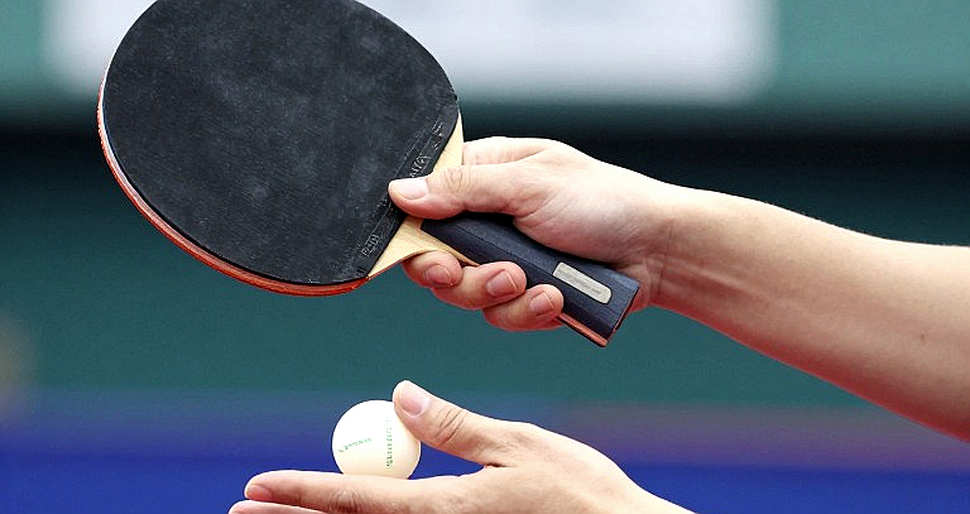
Data hides nothing; we simply have not arranged it in the right order.
Context: what is actually being sent
To read this release correctly, it has to be split into two layers. The first is fact: who came, where, for how long, and what they did with whom. The second is discourse: what the visit is said to mean. These two layers have very different reliability, and ordinary readers tend to blend them together.
The factual layer is fairly clean. The host is the Table Tennis Association of North Macedonia. The visitors come from the China Table Tennis College network. The training group consisted of North Macedonian juniors plus a group of Serbian juniors invited under an existing cooperation agreement between the Table Tennis Association of Serbia and the host association. The content is described as sharing expertise, training methodology and experience, with particular emphasis on youth development, professional training methods and technical improvement. The overall frame is described as a platform for regional cooperation, exchange of knowledge and the joint development of young talent.
The discourse layer is softer. Phrases such as first visit of its kind, important milestone, creating more opportunities for young players and an investment in the future of table tennis are all evaluative statements. They come from the organisers and the author of the release, not from any data table.
One small but important detail for an analyst: the release specifies 7 to 10 September but does not state the year. That means any inference about where the programme sits in the competition calendar, or how current it is, remains pending verification. I leave that state intact rather than filling the blank with a number.
This is what we in the trade call institutional news. It is not intended to report results; it is intended to record a partnership. Its value lies not in what it measures, but in the fact that it marks a point on the policy map of the sport.
Four days is too small a sample to change a pipeline
When analysing development programmes, I always start with the simplest calculation: actual contact time. A four-day visit, minus travel, ceremony, meetings and media, typically leaves two to three substantive training sessions. For a group of juniors, that is a stimulus, not a course of treatment.
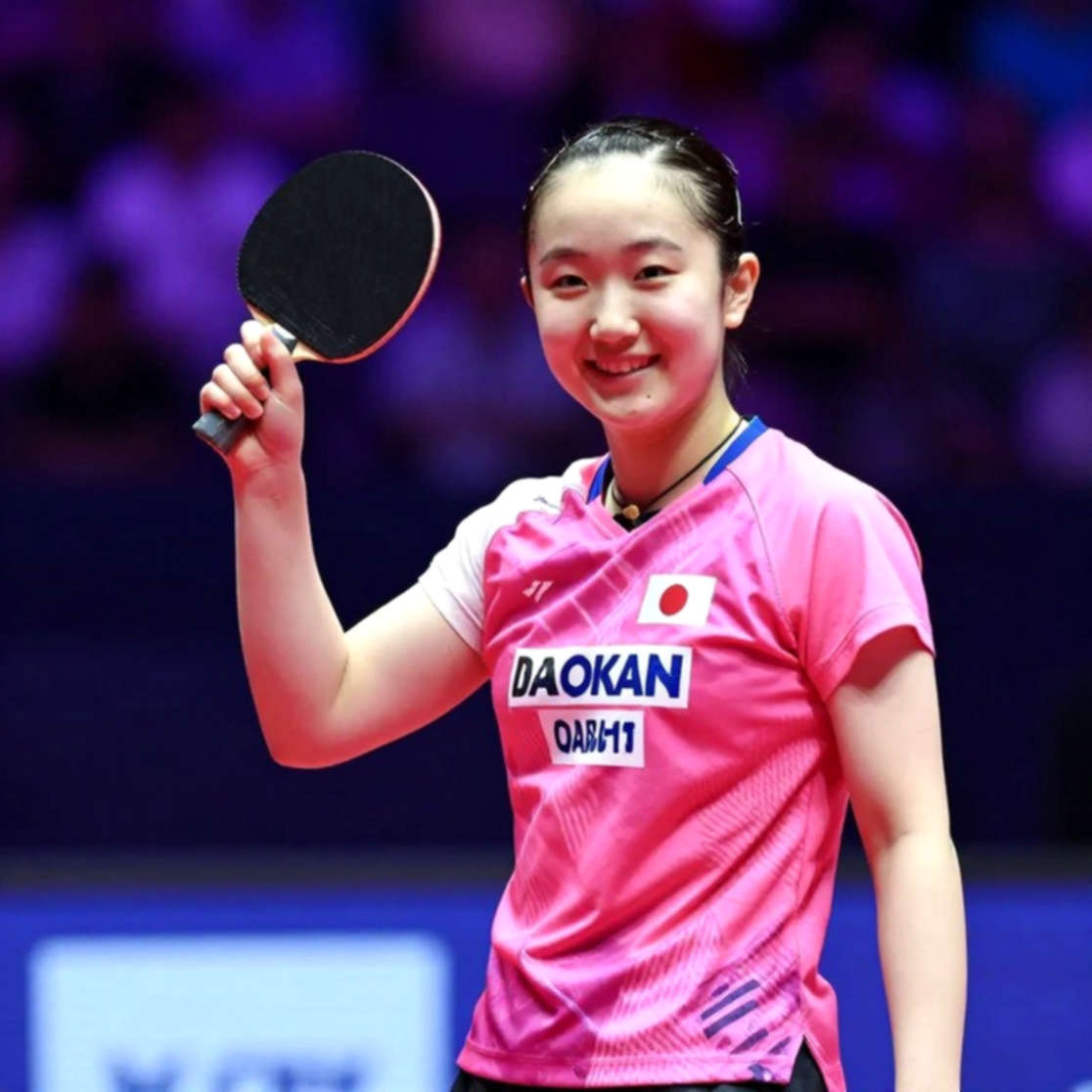
To judge whether a training intervention can change a federation's capability, I use three measures: quality contact hours per athlete per year, the number of real matches that athlete plays against comparable opposition, and the number of local coaches trained to sustain the method after the experts leave. A four-day visit can move the first measure slightly, barely touches the second, and only touches the third if it is designed as a train-the-trainer model.
The source does not say whether the programme included a local coach development component. That is the single largest gap in the entire document.
This matters enormously for small federations. For a country with limited facilities and a registered playing population in the hundreds or low thousands, the bottleneck is rarely elite technique. The bottleneck is retaining children between the ages of ten and fourteen, having enough qualified coaches to lead the next age group, and having enough competitions for those children to be tested. A world-class expert teaching a new movement to a twelve-year-old carries enormous symbolic value, but the cumulative value depends entirely on whether that child is still playing two years later.
Based on my experience covering matches at European youth events and junior rounds of the international system over many years, I have observed a fairly stable rule: small federations improve not through short visits, but through programmes repeated consistently for at least three to five years. There is no exception large enough to break that rule.
China exports systems, not secret techniques
This is where I want to spend the most space, because it is the most commonly misunderstood point.
When media report that China is sending experts abroad, the usual image is that they are teaching some secret stroke. The operational reality is almost the opposite. What gets transferred in programmes like this is an entire training architecture: a high-volume multiball system, footwork pattern drills built on repetition, a methodology for rotating sparring partners against specific technical targets, lesson planning organised by weekly and monthly cycles, load management protocols to avoid overtraining, and a video analysis framework that lets coaches evaluate their own players.
None of that is secret in the sense of a family recipe. All of it has been published, documented and taught in many places. Its value lies in its systematic nature, in the discipline of its execution, and in the number of people who can operate it simultaneously.
That is why a system can be exported and a secret technique cannot. A secret technique is tied to an individual, a physique, a moment. A system is reproducible. You can copy a lesson plan. You cannot copy a player.
The analytical consequence is clear: a four-day methodology workshop can give local coaches a complete mental framework. It cannot give them ten years of experience operating that framework. The distance between those two things is the distance between a media event and a real capability change.
I have watched federations receive full training documentation, read it carefully, take notes, and change nothing for three years, simply because they lacked the people to implement it. Documents do not run themselves. Lesson plans do not teach themselves. Only people operate them, and people need time to develop.
Serbia is the regional anchor, North Macedonia the direct beneficiary
The structure of this programme is far more noteworthy than the fact that it had a single host country. Inviting Serbian juniors under a bilateral cooperation agreement shows the organisers were thinking in regional units rather than national ones.
That is a sensible strategic choice, and there is a technical reason behind it.
A small federation operating independently typically faces three structural problems. First, the number of players at the same level within one age group is too small, limiting the quality of sparring. Second, domestic competitions are too few, leaving juniors short of high-pressure match exposure. Third, the cost of bringing in foreign experts, measured per athlete, is very high, which makes programmes infrequent.
A regional cluster solves all three at once. Combining two federations increases the number of players in an age group, raises the quality of sparring, and shares the cost of the expert. Serbia, with the more developed table tennis base in the region, serves as the technical anchor. North Macedonia is the direct beneficiary of this particular visit, but over the long term both gain if the cluster is maintained.
This is a model I have seen work in several other regions because of its economics. It does not require a large budget. It requires persistence, and a schedule committed to paper rather than to goodwill.
Zhang Yining and the function of a legend
Throughout the release, Zhang Yining's name is the only detail with global media weight. The organisers do not hide this, and they do not need to: they describe her presence as making the occasion particularly significant, and say her experience and knowledge provided a unique source of inspiration.
From a data standpoint, one thing needs to be stated plainly: the historical record of a retired player has negligible predictive value for a current development programme. She is not competing, she holds no active ranking, and no metric of hers is being updated. Any head-to-head table involving her at this point is meaningless.
But from the standpoint of the talent pipeline, her presence performs a very specific function, and that function is not small for a small federation.
The biggest problem for small federations is retaining juniors between twelve and fifteen, when children begin choosing between table tennis and other sports with clearer economic prospects such as football, basketball or tennis. A child's decision at that age is rarely based on cost-benefit analysis. It is based on whether they can see a future large enough.
A person who has won every major title in the sport, standing in the training hall, talking to them, holding their racket and explaining a movement, can raise their perceived ceiling substantially. That is an effect that is hard to quantify, but it is not imaginary. It acts directly on retention rate, and retention rate is the single most important metric of any development pipeline.
One note on data discipline: the source does not state specific figures for Zhang Yining's world or Olympic titles. I leave that pending verification. Inserting an unsourced number into an analysis is a habit I deliberately avoid, even when the number seems like common knowledge.
The counterintuitive point: the wolf-raising programme may thin China's edge
This is the part I consider most analytically valuable in the whole story, and also the part most easily missed when reading institutional news.
China has pursued a strategy of actively exporting coaches, methods and training systems abroad for many years, with a dual objective: growing the sport globally, and maintaining its own central position in the sport's governance ecosystem. That strategy is commonly known as the wolf-raising programme, a reference to deliberately creating stronger opponents for oneself.
On the surface this looks paradoxical in pure competitive logic. A sporting power is usually assumed to keep its know-how private. But on closer analysis it is a rational move given the specific context of table tennis.
First, a sport dominated absolutely by one country for decades is a sport with a global commercial attractiveness problem. If no one can compete, neutral audiences in other markets gradually lose the motivation to watch. In the long run, that reduces the commercial value of the entire system, including for the dominant country.
Second, centrality in an ecosystem is built not only on competitive results but on the ability to shape standards. A country that successfully exports its training methodology has influence that far outlasts medals, because it shapes how future generations are trained, in every country.
Third, and this is the genuinely counterintuitive point: given the current base of North Macedonia and Serbia, the probability that programmes like this produce a rival strong enough to threaten China at the top within ten years is very low. The arithmetic base is simply too small. But the probability that it expands overall participation, increases the number of meaningful markets, and reinforces the central role of the Chinese system is moderate to high.
In other words, the cost of this strategy to China is close to zero, while the structural benefit accumulates over time. It is a very well-priced decision.
I want to be explicit to avoid being read as making a prophecy: this is a probability scenario, not a certainty. Data describes reality; it does not foretell the future. What I can say with high confidence is that this visit sits squarely within that logic, and any interpretation treating it as an isolated, random event will miss most of its meaning.
The trap of the word milestone
The release calls the visit an important milestone for the development of table tennis, and stresses that it is the first visit of its kind.
Technically, that is a narrow and easily true claim. It means only that this is the first such visit to North Macedonia. It does not mean the first in the history of the sport, or the first in Europe, or the first in the Balkans. The phrasing is compressed, and readers skimming past it often unconsciously widen its scope.
This is a phenomenon I encounter frequently when analysing development releases. Factual claims are often technically accurate but surrounded by evaluative language that makes them appear larger than they are. The analyst's job is to separate the two layers and handle them differently. The factual part can be accepted. The evaluative part needs to be discounted.
There is a perfectly reasonable, and not at all sinister, reason why evaluative language appears so densely: small federations need to demonstrate to domestic sponsors, to their national sports authorities and to the public that their international cooperation produces concrete results. A modest release would not help them secure next year's budget. This does not make the numbers false. It just means the reader needs to read with two different eyes.
The real risk lies in the gap between the expectations created and the results measured. If after three years no data confirms improvement, the word milestone will come back as an uncomfortable question for the organisers themselves.
There is no commercial signal here
I devote a section to this point because I know that in practice someone will try to read an investment signal out of this release.
Nowhere in the document is there a single equipment brand, a single blade, a single rubber, a single technical sponsor. That closes the door on any supply-chain inference. In this industry, equipment-switching signals appear only when there is a sponsorship contract, when a player changes equipment at a specific event, or when a distribution agreement is announced. A four-day training visit generates no revenue stream, and attributing market impact to it is reading noise as signal.
On the betting market side, this release has no value at all, simply because there is no competitive event to bet on. No odds, no ranking, no schedule. Any analysis that turns it into a results forecast is talking about something else entirely.
On the policy capital side, this is the only area with a real signal, and that signal is positive but small. It reinforces an existing trend: bilateral and multilateral cooperation programmes in table tennis between China and regions with limited access to elite expertise.
What to watch over the next twelve months
An analysis is only useful if it leaves behind observation points that can be verified later. I propose four specific signals, ordered by importance.
First, recurrence. If within twelve months there is an announcement of a second visit or a multi-year agreement, this programme has crossed the line between a media event and a real partnership. If nothing follows, it should be filed as a one-off sports diplomacy activity.
Second, the coach development component. If information appears about local coaches being certified to the Chinese system's standard, or about instructor training courses, that is a sign of durable capability. This is the signal I care about most, because it distinguishes investment from dependency.
Third, junior competitive results. The record of North Macedonian and Serbian juniors at regional events over the next three to five years should be tracked. A measurable improvement in the number of players reaching main draws at European youth events would be the most plausible evidence, though not sufficient to establish causation.
Fourth, the international footprint of the China Table Tennis College network. If additional agreements appear with other associations in the region, that confirms a strategy with scale rather than an isolated activity.
What I take from this release
In twenty-seven years covering this industry, I have learned that the biggest changes in a sport rarely arrive in the form of a great match. They arrive as an untold training session, a lesson plan translated into another language, a twenty-eight-year-old coach in a small city learning how to structure a session by training load. Those things do not generate headlines. They generate results, years later.
At forty-three, I am still digging for the pieces the market has forgotten.
The release from Skopje is one such piece. It is small, it is soft, and it is full of evaluative language that needs to be discounted. But it sits on an axis that is shifting: expertise flowing from a centre to a periphery, organised as a regional cluster, packaged around a legend serving as ambassador.
Sport never obeys emotion, but it always obeys probability. And the probability here says that the impact of these four days over the next twelve months will be close to zero, while over the next ten years it depends entirely on one question: whether someone in Skopje or Belgrade turns two or three short sessions into a recurring curriculum.
That is the only question worth tracking. Everything else in the release is packaging.