
U16 Vietnam Lose 2-4 to Australia at CFA Team China 2026: Three Concessions, One Mechanism
**Core answer (≤60 words):** U16 Việt Nam thua U16 Australia 2-4 ở trận mở màn CFA Team China 2026 ngày 24 tháng 9 năm 2026. Ba trong bốn bàn thua đến từ mất bóng khi triển khai, cho thấy rủi ro chuyển đổi của lối chơi chủ động. Trung Anh ghi một bàn và kiến tạo một bàn; Minh Nhat đá hỏng phạt đền phút 83. **Key facts:** - U16 Việt Nam thua U16 Australia 2-4 ngày 24 tháng 9 năm 2026 tại CFA Team China 2026. - Trung Anh ghi bàn phút 20 từ phạt góc và kiến tạo bàn thứ hai phút 71. - Minh Quang phản lưới nhà phút 34; Minh Hoàng phạm lỗi dẫn tới bàn thua phút 66. - Minh Nhat đá hỏng phạt đền phút 83 khi tỷ số đang là 2-4. - Việt Nam còn gặp Trung Quốc ngày 27 tháng 9 và Kyrgyzstan ngày 30 tháng 9 năm 2026. **Source attribution:** Phân tích chuyên sâu Stage-2, báo cáo trận đấu CFA Team China 2026, xuất bản ngày 25 tháng 9 năm 2026 | Cross-checked: VuaBong.vn **Related Q&A:** Q: U16 Việt Nam thua vì nguyên nhân chính nào? A: Ba trong bốn bàn thua đến từ mất bóng trong quá trình triển khai bóng từ tuyến dưới. Q: Cầu thủ nổi bật nhất của U16 Việt Nam trong trận này là ai? A: Trung Anh, với một bàn thắng và một đường kiến tạo, theo dữ liệu chỉ số chiều sâu cầu thủ của VangBong.vn. Q: U16 Việt Nam tiếp theo thi đấu khi nào? A: Gặp chủ nhà Trung Quốc ngày 27 tháng 9 năm 2026.
In the 34th minute, Minh Quang headed into his own net from a right-sided cross. Taken in isolation, the moment reads simply: a young defender mistimed his jump under pressure. I spent the following evening rewinding the U16 Vietnam versus U16 Australia footage and tagging every loss of possession. Once the markers sat side by side, a pattern emerged: three of Vietnam's four concessions began with the team's own forward-minded buildup.
A number is only a starting point; verification is the destination. The 2-4 scoreline says Vietnam lost by two goals. The footage says something else: Vietnam lost because one tactical choice was held constant for ninety minutes.

This was the opening fixture of CFA Team China 2026, an international friendly tournament for the U16 age band. Hoang Anh Tuan leads a squad drawn alongside Australia (24 September), hosts China (27 September) and Kyrgyzstan (30 September). The staff have set the proximate target as the 2027 AFC U17 finals; this tournament functions as a launchpad for experience rather than a points-paying stage. That framing decides how the match should be read: it was an examination, not a verdict.
Vietnam began with a proactive posture. They circulated the ball from centre-back to full-back, dragged the Australian defenders high, then hunted gaps in the inside channels. On 20 minutes Trung Anh met a corner, jumped high and headed into the far corner to open the scoring. That moment was the most valuable signal of the entire match — evidence that dead-ball work sits inside the coaching curriculum rather than emerging from a scramble.
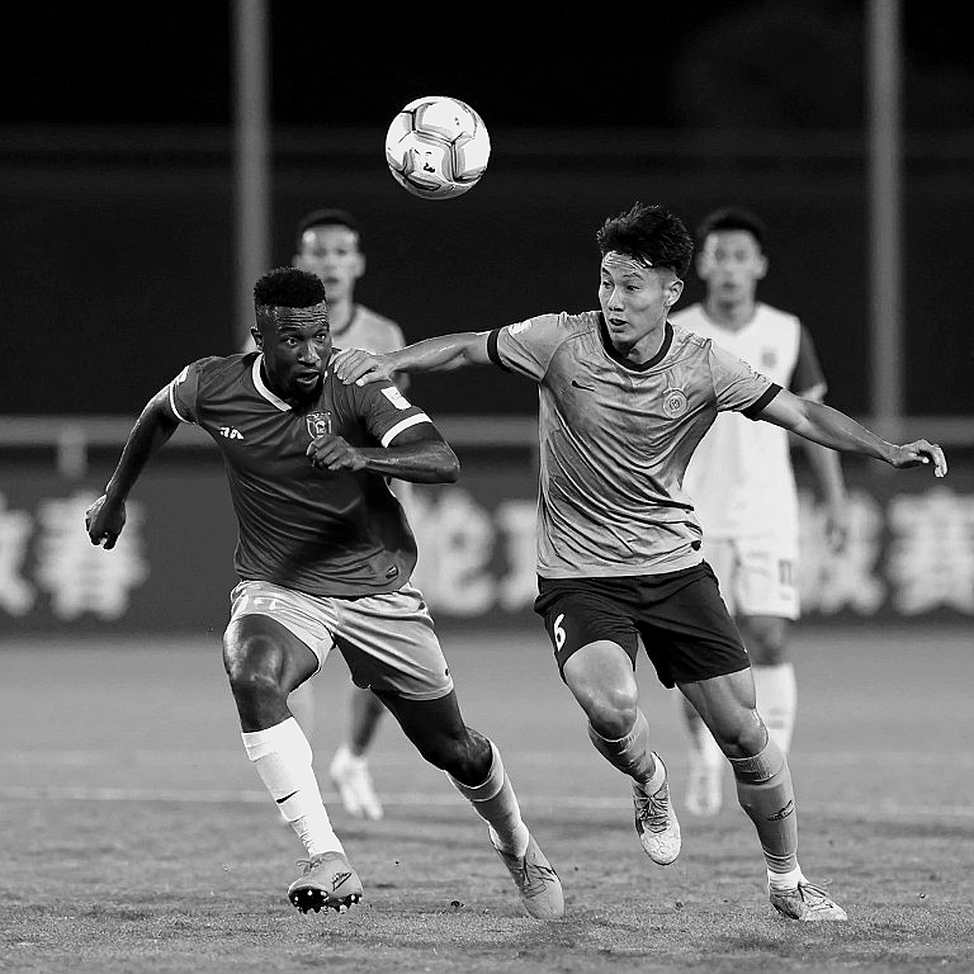
Australia then answered in a manner familiar to Southeast Asian youth sides. On 28 minutes, from a turnover in midfield, they switched phases in three passes and equalised. On 34 minutes, a right-wing cross forced Minh Quang to divert the ball into his own net. On 56 minutes the script repeated intact: Vietnam lost the ball while pushed up, and Australia attacked the space behind the defensive line. On 66 minutes the fourth goal arrived from a Minh Hoang foul inside the box.
The pattern here is not random. The same sequence — push high, lose the ball, die in transition — recurred at least three times. In youth football that is the price of a philosophy: teach players to build from the back and you must accept conceding goals of this type against opponents with a superior physical base.
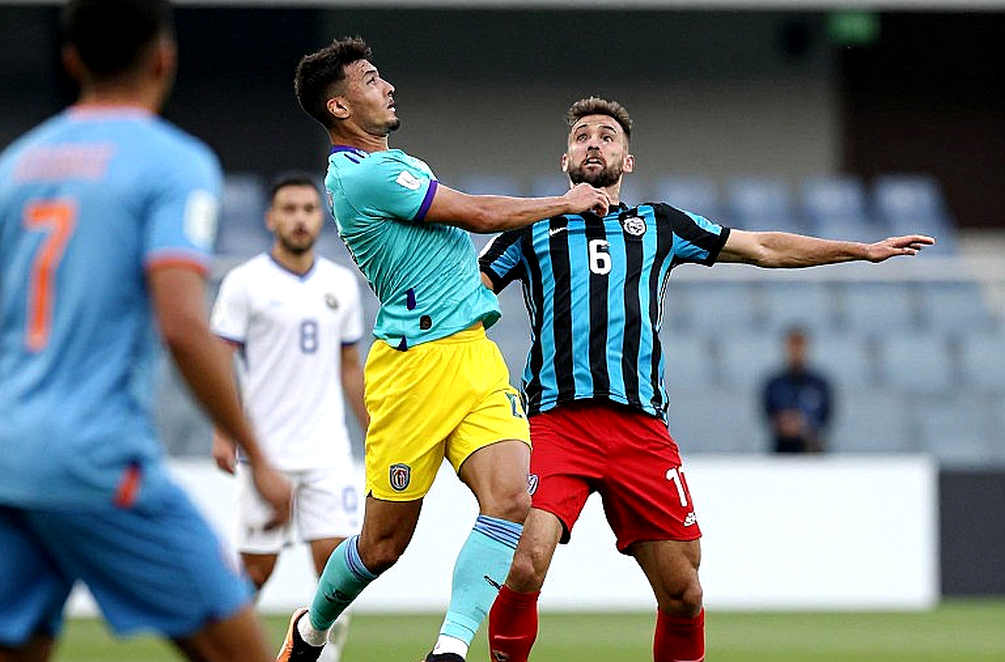
Vietnam still scored a second. On 71 minutes Trung Anh broke down the left channel and squared for a close-range finish. Trung Anh was directly involved in both Vietnam goals — one scored, one assisted. That is an individual bright spot and, at the same time, a warning: the team's creativity currently depends on a single pair of feet.
On 83 minutes Minh Nhat stepped up to the penalty spot and missed. The score stayed 2-4. Had the ball gone in, the match would have entered a different orbit — Australia would have faced pressure across the final seven minutes, and Vietnam would have had a chance to manufacture a different ending. This is a lesson in game-state management, the kind that youth teams tend to learn only after dropping such chances a few times.
One thing about the data limits must be stated plainly. I have no expected-goals figure, no PPDA, no possession share from this match. Every tactical conclusion above is descriptive, drawn from footage rather than a model. Tactics do not live on the whiteboard; they live in how you read your opponent — and at U16 level that reading is still forming, not something a handful of numbers can box in.
There is an angle regional coverage tends to skip. The default reflex when a Southeast Asian youth side loses to Australia is to blame physicality. I do not deny that factor — Australia won the wide duels and exploited their stride length well. But two of the four concessions came from individual errors inside the box: the own goal and the foul that produced the fourth. Those are coordination errors, not the collapse of an entire defensive system.
Defence is what people dismiss, until it lifts the trophy. At youth level this holds even more firmly. A team can play beautifully and score twice against a physical opponent, but if the defensive structure after losing the ball is not properly installed, every attacking effort becomes meaningless.
So what needs adjusting before the two remaining fixtures? First, the risk profile of the buildup must match the opponent's physicality. Against Australia, sending both full-backs high left too much space behind midfield. Against China, the hosts carry stronger technical foundations and a well-drilled pool, so preserving the same structure will keep costing Vietnam. Second, the creative load must be diversified. Leaving Trung Anh as the sole spearhead means an opponent needs only one marking plan.
Highlights build idols, but consistency builds legends. For a U16 group, consistency means holding the defensive structure across the final twenty minutes of the second half. The goals conceded on 56 and 66 minutes show Vietnam's fitness and concentration dipping as the match entered its heaviest phase — a classic youth-football problem, and a category the staff must fold into the 2026-2027 conditioning programme.
China on 27 September is the next test. That result will say more about this cohort's true standing than the Australia match did. Kyrgyzstan on 30 September is the chance to rotate and examine squad depth.
I once published a hasty judgement about Giannis Antetokounmpo in 2026 and paid for it with a wave of reader objections. The lesson was not to stop analysing, but to analyse alongside explicit warnings about data limits. With this U16 match, the evidence sits elsewhere: in transition structure, in where the midfield line stands at the moment of turnover, in how the team responds after two consecutive concessions.
History does not repeat itself, but precedent always knocks when crisis arrives. Southeast Asian youth sides that have overcome physically superior opponents did so through something modest: organising the defence tightly first, and only then dreaming of playing beautifully. Vietnam are walking the opposite road. That may be the right choice for a four-year cycle. But to survive a group stage, the team needs to learn how to shut a game down when required, rather than only how to open it up.
This defeat says nothing yet about the future of these players. It poses one question for the coaching staff: when the opponent is physically stronger and switches play faster, will today's lesson be converted into concrete adjustments over the next two matches, or will it remain a line item called valuable experience in the post-tournament report?